
Dear members and fellow travellers
In 1934, as war threatened to engulf the world, H.G. Wells addressed the PEN Congress in Edinburgh: “The defence of liberty of expression, and that defence alone, defines a task big enough for all your efforts as a society.”
His warning to PEN was precise. “If and when National Socialism or Fascism invades the liberties of thought and literature, the PEN must fight… But it must confine its fight to that issue.” PEN, he argued, should not align itself with other movements or ideologies. It should have no institutional position “for or against Communism, Catholicism, Protestantism, Imperialism, Pacifism, or any other -ism. The organisation exists for one purpose: to defend the freedom of thought and literature.”
This principle of single-minded internationalism is hard to sustain in practice beyond the niceties of motherhood statements. Recently, I spoke with a group of regional writers about drawing attention to imprisoned writers in distant parts of the world; their response was cautious and even a little confused. One of them asked, “Why, as an Australian, do you want to promote in Asia the case of a writer in, say, Belarus?”
I was not sure how to answer other than to say that PEN has continued as a movement for over a hundred years now, because global connections matter to writers. A writer imprisoned or killed or maimed for the form or content of her work is not only a national concern; her condition is part of the shared universe of writers everywhere.
In this spirt of global solidarity, we look forward to welcoming to Perth, Dr Ma Thida, who is herself a writer persecuted by the regime in Myanmar and an activist on behalf of writers in prison and at risk all around the world. You will have a chance to talk to Thida at Murdoch University on 13 April and there will be other opportunities later in the month.
I look forward to seeing some of you at our April events with Ma Thida.
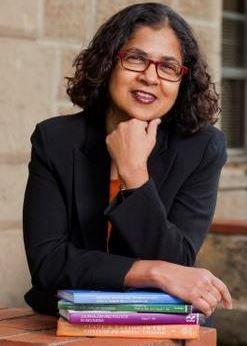
– Krishna Sen, PEN Perth Chair
 penperth.com