
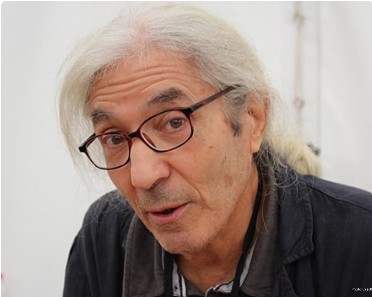
Eighty-year-old Franco-Algerian writer and journalist Boualem Sansal was arrested in November 2024 by Algerian authorities on trumped-up charges of ‘undermining national unity’ and ‘attacking state institutions’ after suggesting in an interview with the extreme-right wing media Frontières, France had unfairly transferred Moroccan territory to Algeria during the colonial era.[1]
This territorial issue has soured French–Algerian relationships for decades, and fired up again in 2024 after French President Emmanuel Macron backed Moroccan sovereignty over the Western Sahara.
Algeria was colonised by France from 1830 to 1962. During the 132 years of colonisation, frequent and lengthy uprisings against the French rulers were systematically brutally repressed. After a bloody war that left a death toll of 1.5 million Algerian combatants and civilians[2] and 31,000 French colonialists (pieds-noirs) and military personnel, both countries have unsuccessfully been trying to come to terms with acts of cruelty and torture during colonisation and the War of Independence (1954–62). In the years following the 1962 Evian Accord, hundreds of thousands of Algerians came to work in France. A 1976 law allowed their families to join them, which explains why there are so many sons and grandsons of Algerians who can call France home, and are often, like Boualem Sansal, dual nationals.
Since 1962, Algeria has been ruled on and off by the Front de Libération Nationale (FLN). The regime became increasingly authoritarian over the decades. Repression against journalists in particular is rife. According to the World Organisation Against Torture (OMCT), the Algerian authorities ‘have deployed their full security, judicial, and media arsenal to shrink civic space, intimidate dissenting voices, and maintain the authoritarian status quo. Algerian citizens, activists, journalists, and writers now face a climate of widespread repression.’[3]
As a dual national, Sansal received the support of the French government who, together with thousands of French protesters and literary luminaries of the likes of Salman Rushdie and Nobel Prize laureate Annie Ernaux, advocated for the squashing of his five-years conviction and his immediate release.
In November 2025, after one year in jail, Sansal was pardoned by Algerian President Abdelmadjid Tebboune. This was a victory for freedom of expression.
Three months later in February 2026, as a recognition of his contribution to literature written in French, Boualem Sansal now a Parisian resident has been appointed to the peak French institution, the Académie française. He will join 37 other so-called Immortals, all writers of high renown. He is the second Franco-Algerian immortal after novelist Assia Djebar to be so recognised. What a reward for a writer who didn’t compromise on his convictions.
It is hoped that Sansal’s pardon is a signal of a détente between France and Algeria and will extend to other unfairly detained writers in Algeria. We are thinking of another prisoner of conscience, French journalist Christophe Gleizes, detained since May 2024 for alleged ‘glorification of terrorism and propaganda harming national interest’.[4] His ‘crime’ was to write about a football club run by a leader of the Movement for the self-determination of Kabylia. In December 2025, the appeals court confirmed Christophe Gleizes’ conviction to seven years in prison.
Freedom of expression is a fragile human right we need to be relentlessly vigilant about.
Hélène Jaccomard
26 February 2026
[1] Philip Oltermann, “French-Algerian author Boualem Sansal sentenced to five years in prison”, The Guardian 28 March 2025, https://www.theguardian.com/books/2025/mar/27/french-algerian-author-boualem-sansal-sentenced-to-five-years-in-prison
[2] Numbers vary according to sources, from 400,000 to 1.5M https://www.britannica.com/place/Algeria/Relations-with-Europe
[3] “Algeria: Joint call for press freedom and an end to arbitrary detentions”, OMCT 3 May 2025.
[4] Brice Laemle et Simon Roger, « Christophe Gleizes : les proches du journaliste, incarcéré en Algérie, entretiennent l’espoir d’une libération », [The family of Christophe Gleizes, imprisoned in Algeria, maintain hope for his release], Le Monde 29 Janvier 2026. https://www.lemonde.fr/afrique/article/2026/01/29/algerie-les-proches-de-christophe-gleizes-entretiennent-l-espoir-d-une-liberation-du-journaliste_6664603_3212.html
 penperth.com